Feeling Stuck with a Creative Project? How Small Exercises Help Overcome Creative Blocks
Out of ideas? Don’t think bigger. Start smaller.
Many people look for creativity exercises because they want to have ideas of their own again. But the best exercises often sound almost ridiculously simple at first. Go for a walk. Take a shower. Read something different. Write down what comes to you in a dream. If you don’t understand why they actually work, you may not take them seriously. Because a shower doesn’t write a text. A walk doesn’t paint a picture. Journaling doesn’t solve a problem on its own.
But creativity doesn’t begin with a finished painting either. It begins much earlier, in the ability to create a state in which inspiration becomes possible again.
Creative blocks can feel very different, at least for me. Like a complete blackout, like inner restlessness, like the pressure to deliver quickly, or simply like the dull repetition of what you already know. Sometimes the block begins with the very idea that creativity has to look like art.
For me, creativity doesn’t only begin much earlier. It also doesn't necessarily have anything to do with artistic expression. It is much more everyday than that, and it allows us to leave familiar territory, to not only solve a problem but to look at it differently. It can become visible in a picture, but just as much in a conversation, in a decision, in the way someone cooks, writes, works, gives, thinks, or deals with a difficult situation. And the movement from which it emerges is not reserved only for artists.
An idea is not yet a work
I didn't learn this from books first, but with a pencil in my hand. When I moved to Germany from Ukraine, my mom enrolled me in an art school again. And even though I had already brought a great deal of prior knowledge with me, my art teacher Wladimir made me spend weeks drawing only one line with a pencil. One. Line. For. Weeks.
I had a pencil, a few sheets of paper per session at best, and I was not allowed to lift the pencil from the page. The task was to find lines and forms I had not drawn before. Anyone who has ever done this knows how difficult it is. You fall so easily into your usual doodling routine. It's an incredibly challenging exercise, because on the one hand you're not "allowed" to exit the situation, and on the other you notice how quickly you fall back into familiar patterns, how physically bound you are, and how hard you really have to work to break out of the automatism.

A single sheet from these exercises survived a few floods in our basement. I'd have to guess the year, early '90s, roughly.
One single sheet from these exercises survived a few floods in our basement, and I guard it like a treasure because I know what it meant to me as a nine-year-old. Only years later was I allowed to do a more advanced exercise: prints on handmade Japanese paper, in which no circle was allowed to resemble another.
Here is an example of the prints from over 30 years ago, shown in an interiors book by Callwey:
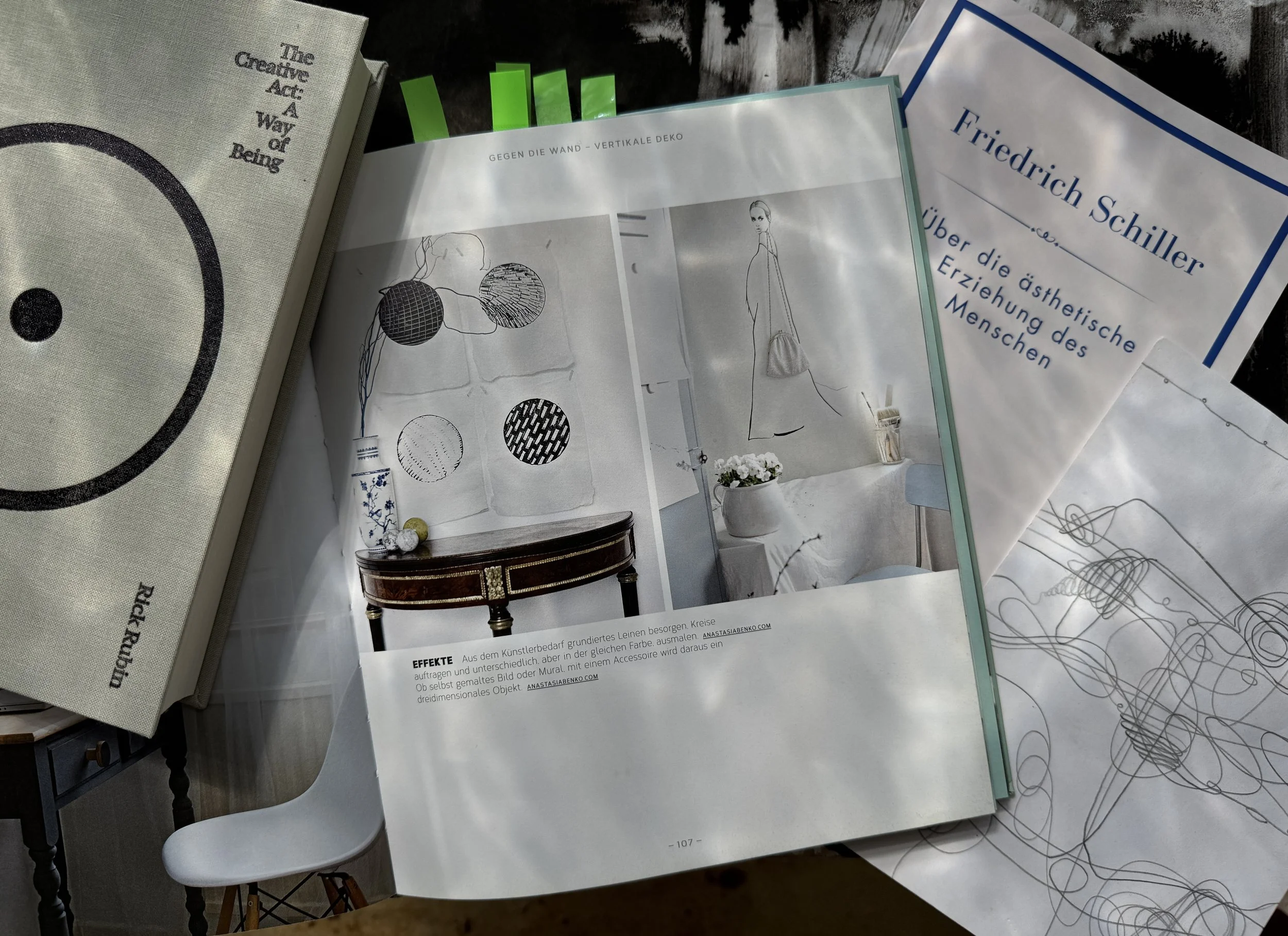
Japanese prints in the book Wohnideen aus dem wahren Leben, Callwey, 2015
When a stop sign sneaks into art
To this day, this kind of printmaking is one of my favorite techniques. Probably also because it already survived lockdown, including hundreds of repetitions and a very patient Charlotte, my lockdown buddy at the time, who probably suffered more under the sheer volume of printed copies than the sheets themselves.
Here you can see a small selection of the printed results from our quarantine workshops. And for me, to this day, it's one of the loveliest examples of how quickly a simple stop sign can sneak its way into art, once a shape has carved itself deeply enough into our memory.
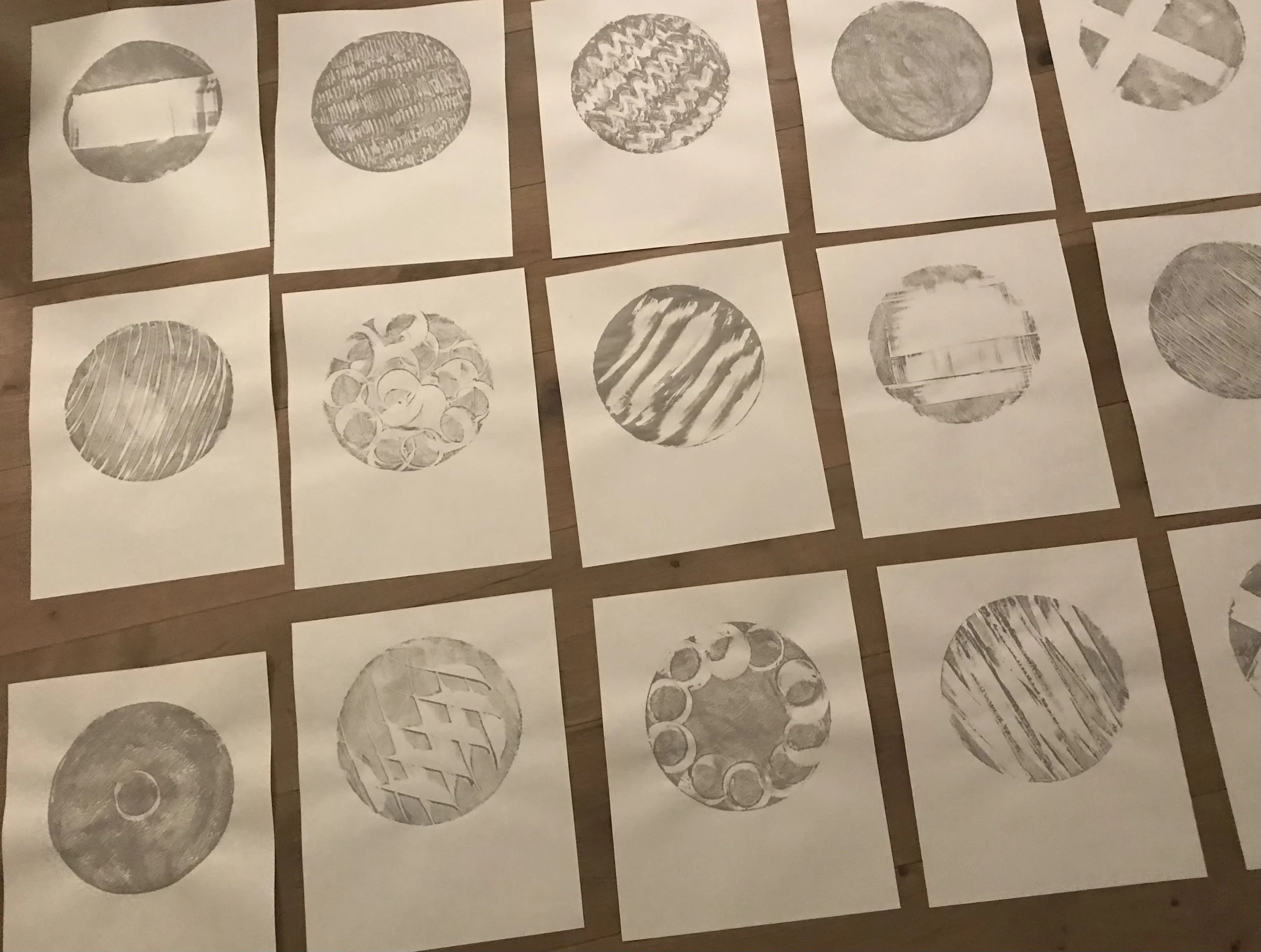
Print results from workshops with a “stop sign” in the upper left during quarantine, 2021
Why creativity does not deliver instant results
Nobody in the creative industries needs an introduction to Rick Rubin. I did. When his book The Creative Act went viral in 2023, I first had to google him first. I bought the book and carried it with me through several weeks of travel across Switzerland and southern Germany. It was not the kind of journey that allowed for reading a book in one sitting, and in a way, that suited the book perfectly. Its small chapters worked in fragments. Exactly the way creative works come into being.
Later, I heard that some people found it too simple. Too spiritual. Not enough method. Too much “woo-woo.” For a long time, I did not understand that reaction, because I recognized myself in so many passages.
Still, it is understandable that many creative truths sound too small for a problem that often feels huge from the inside: Meditate. Play. Be patient. Listen to your own rhythm. Begin. Ignore outside opinions. Be curious. Listen closely. Pay attention.
None of these suggestions are wrong. The problem is that the context and the experience are often missing, the knowledge that they actually change something in the body, in thinking, in perception.
They don't deliver instant results either. They only open up perception. And even that only happens if you're willing to open yourself and leave behind some of what you've learned. Yup, sounds simple. But it is not necessarily easy.
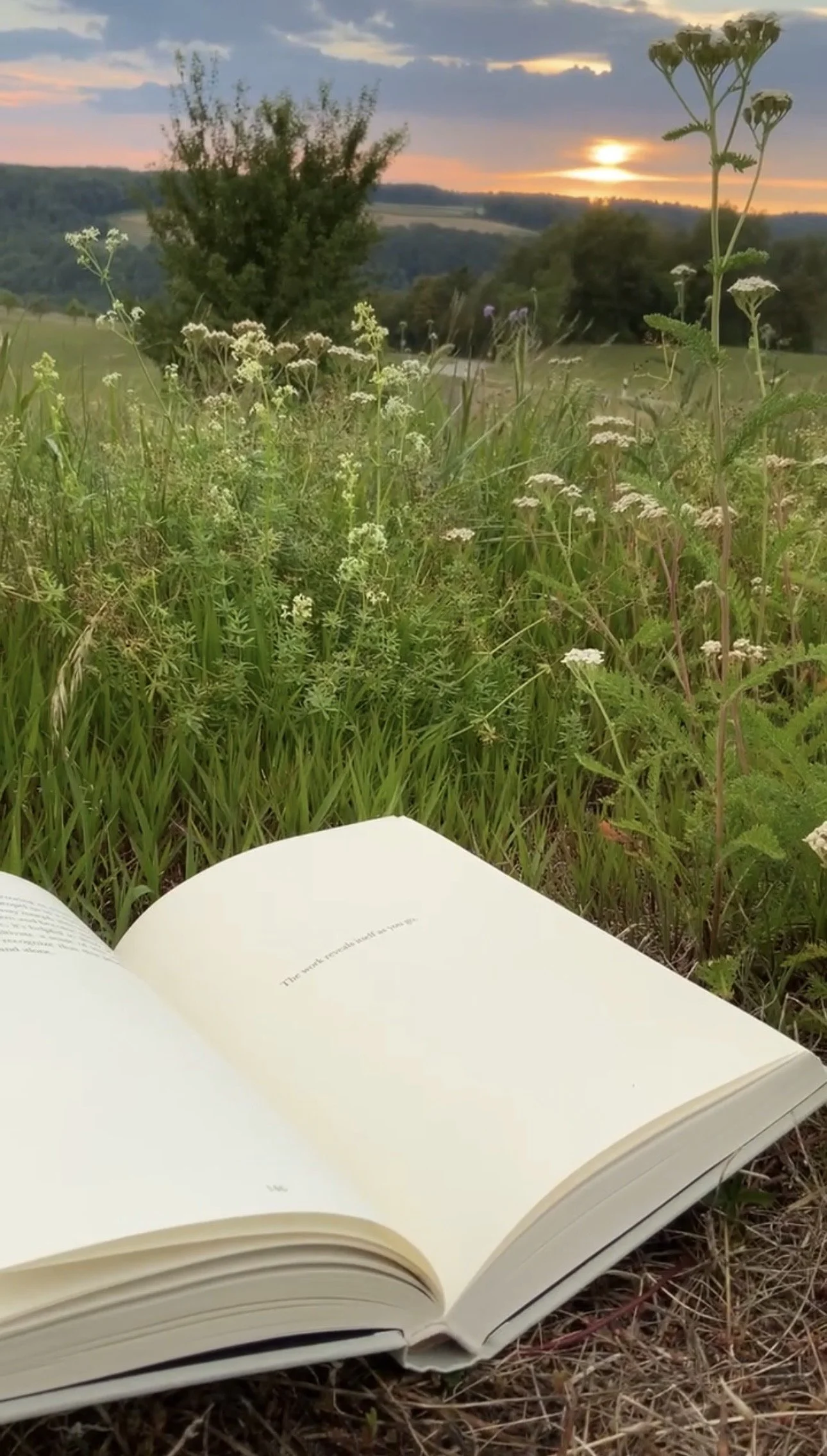
“The work reveals itself as you go” — The Creative Act, Rick Rubin, somewhere in the mountains during a stopover, 2023
Unlearning as physical permission
“Meditation is a valuable tool for hitting the reset button. You may also try vigorous exercise, a scenic adventure, or immersing yourself in an unrelated creative endeavour. When you return with a clear perspective, you will more likely have the discernment to see what the project wants and needs. What allows this to happen is the passing of time. Time is where learning occurs. Unlearning as well.” — Rick Rubin, The Creative Act: A Way of Being, pp. 337–338
One overlapping realization for me was Rick Rubin’s invitation not only to “play,” but also to unlearn the things you've learned. Adults have often learned very well how to control themselves, evaluate themselves, compare themselves, be efficient, be useful, and quickly understand what is expected of them. All of this can be helpful in life. It doesn't mean ignoring your craft or losing your skills. It means loosening the expectations that have become fixed. For creativity, things can get quite tight when inner control kicks in too early. Much of what we’ve learned once protected us, moved us forward, or stabilized us. But in the creative process, it's precisely what has become reliable that can narrow perception. A solution that helped before becomes a habit. A technique that once gave security starts to protect us from the unknown. A form that was once alive becomes a shortcut.
Wladimir understood this deeply. By limiting me to a pencil and a sheet of paper, he did not take away my freedom. He took away the shortcuts, the familiar gestures through which I would have found myself too quickly, and perhaps lost interest just as fast.
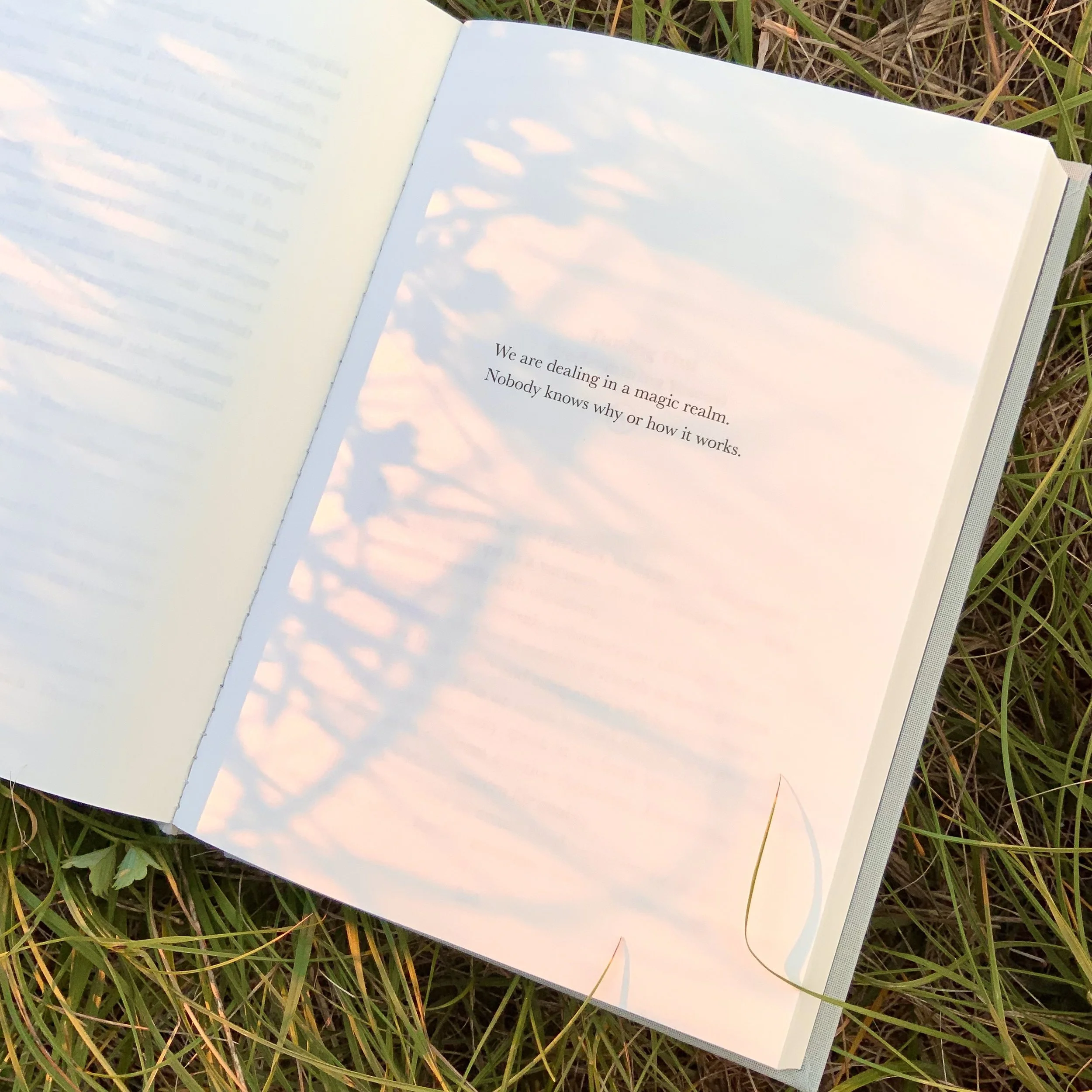
“We are dealing in a magic realm. Nobody knows why or how it works.” — The Creative Act, Rick Rubin, somewhere in the mountains during a stopover, 2023
All these so-called baby steps and sensory repetitions can be helpful because the body does not relearn through analysis and insight alone. Information can explain something, but experience has to make it tangible. A small, manageable action gives the nervous system a counterexample and can help gradually overwrite old patterns. This is exactly why small experiments are so effective. They lower the perceived risk and keep overwhelm small. They make the release of control manageable. They allow the body not only to understand a new experience, but to embody it.
This isn't some magical inspiration reserved only for artists. It's a very human capacity. The body experiences that something can be different, and the mind gets more room to move again. In phases of rest, repetition, or daydreaming, distant connections between thoughts can surface more easily. Not because magic happens, but because the inner pressure drops and thinking is no longer immediately corrected, judged, or utilized.
That is why so many creativity exercises seem almost unremarkable. They do not lead us straight to a result, but back to a more generous form of attention, one that must first be quietly endured. This can sound simple in an age that immediately asks even the imagination to justify its usefulness. Friedrich Schiller wrote this sentence back in 1795, not as a call to action, but as a warning:
“Utility is the great idol of the age, to which all powers are forced to pay homage and all talents must bow.”
Epilogue
Why beauty is not a luxury after all. Or “for art is a daughter of freedom”
Schiller already knew this thing about play over 200 years ago. He wrote his letters On the Aesthetic Education of Man after the French Revolution. He's shaken by the fact that a revolution meant to bring freedom turned into terror. One of his questions: why don't people become more humane despite reason? Because reason alone doesn't heal a person. He goes on to write: "Man only plays when he is in the fullest sense of the word a human being, and he is only fully a human being when he plays."
At first, this almost sounds cute. As if an 18th-century poet were recommending that adults play tag again, or draw on the street with chalk.
But Schiller actually meant something much bigger. He believed that people break down on the inside if everything has to be useful, efficient, and controlled. But if you continue reading him, you also sense something else in his work: how difficult freedom is to endure at all. Schiller’s aesthetic education isn’t simply lightness. It's his attempt to reconcile sensuality and reason — an attempt that, in places, becomes quite strict itself. And this difficulty still accompanies us today. People look for freedom and immediately start controlling it again. That goes for idealists. And for studios.
When we only function, we eventually lose the part of us that can be amazed, feel, dream, or think freely. That is why beauty and play were not a luxury for him. Not something one permits oneself only after all the “important things” have been done. But something that makes a person whole again in the first place.
For long Sundays, full notebooks, and small creative new beginnings: these books accompanied this essay:
Anne-Laure Le Cunff: Tiny Experiments: How to Live Freely in a Goal-Obsessed World
Bessel van der Kolk: The Body Keeps the Score
Friedrich Schiller: On the Aesthetic Education of Man
Wolfgang Welsch: Aesthetic Thinking
Rick Rubin: The Creative Act: A Way of Being