As an artist, Pantone’s Color of the Year reminds me: color is never neutral. It’s never random. It’s a commentary.
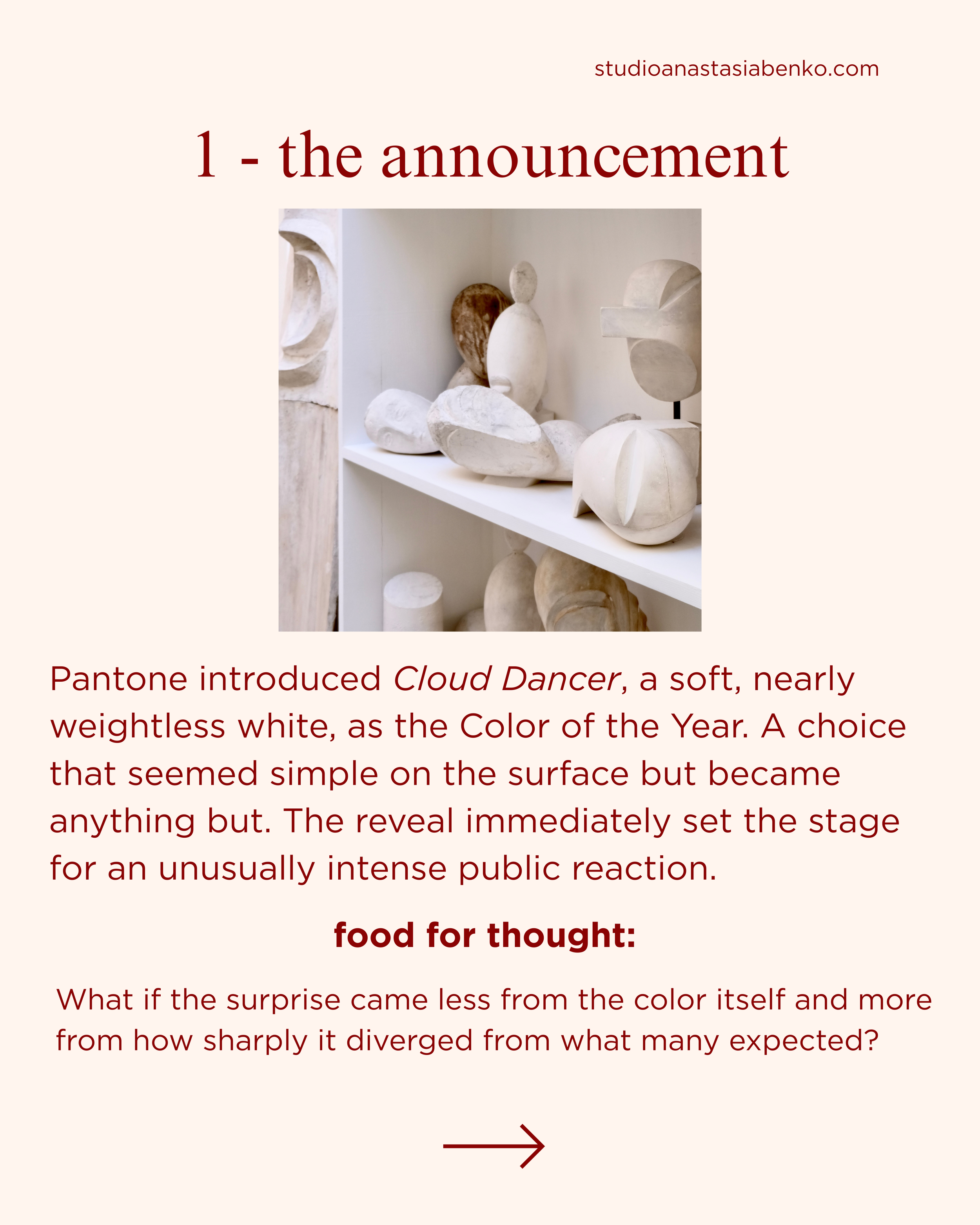
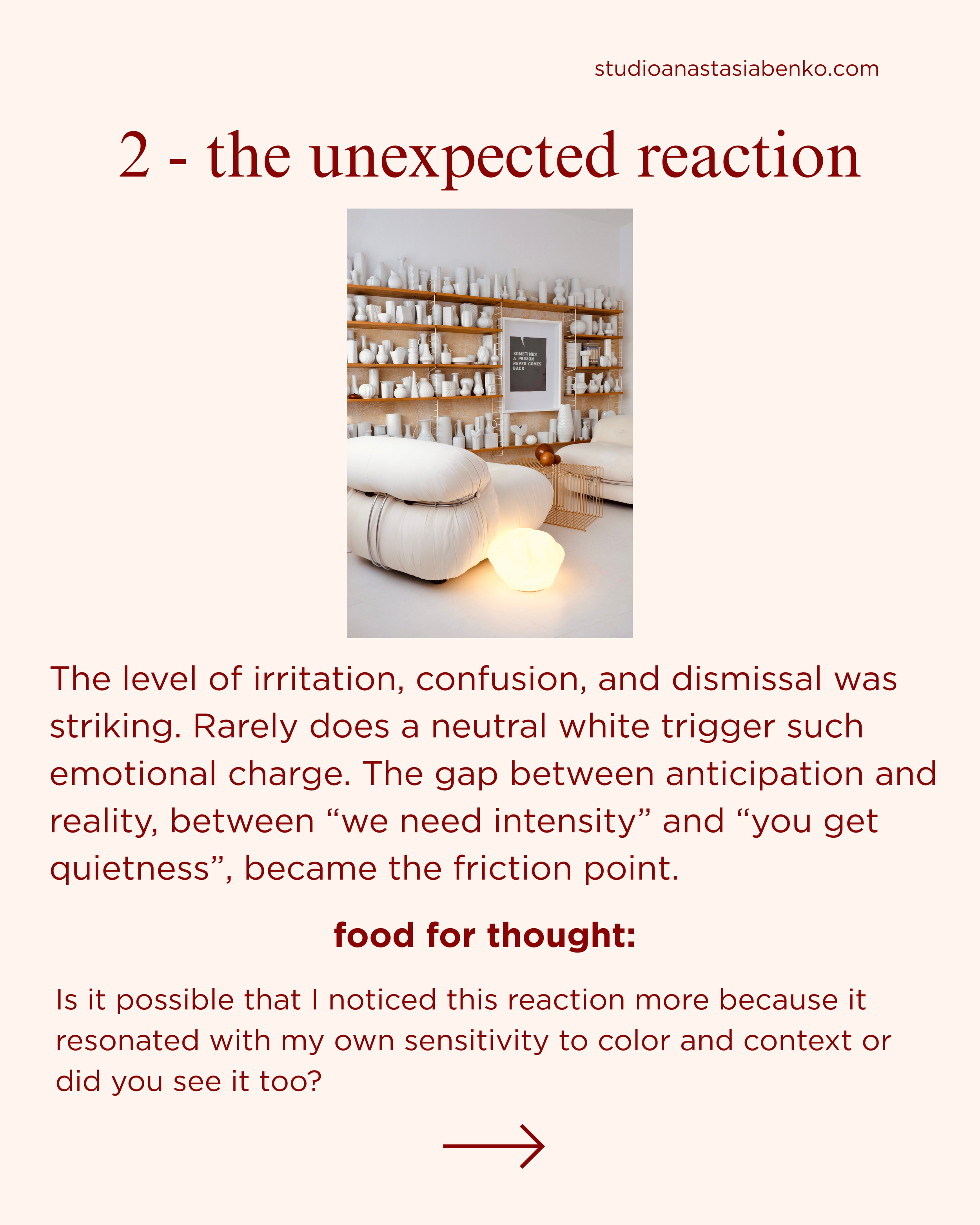
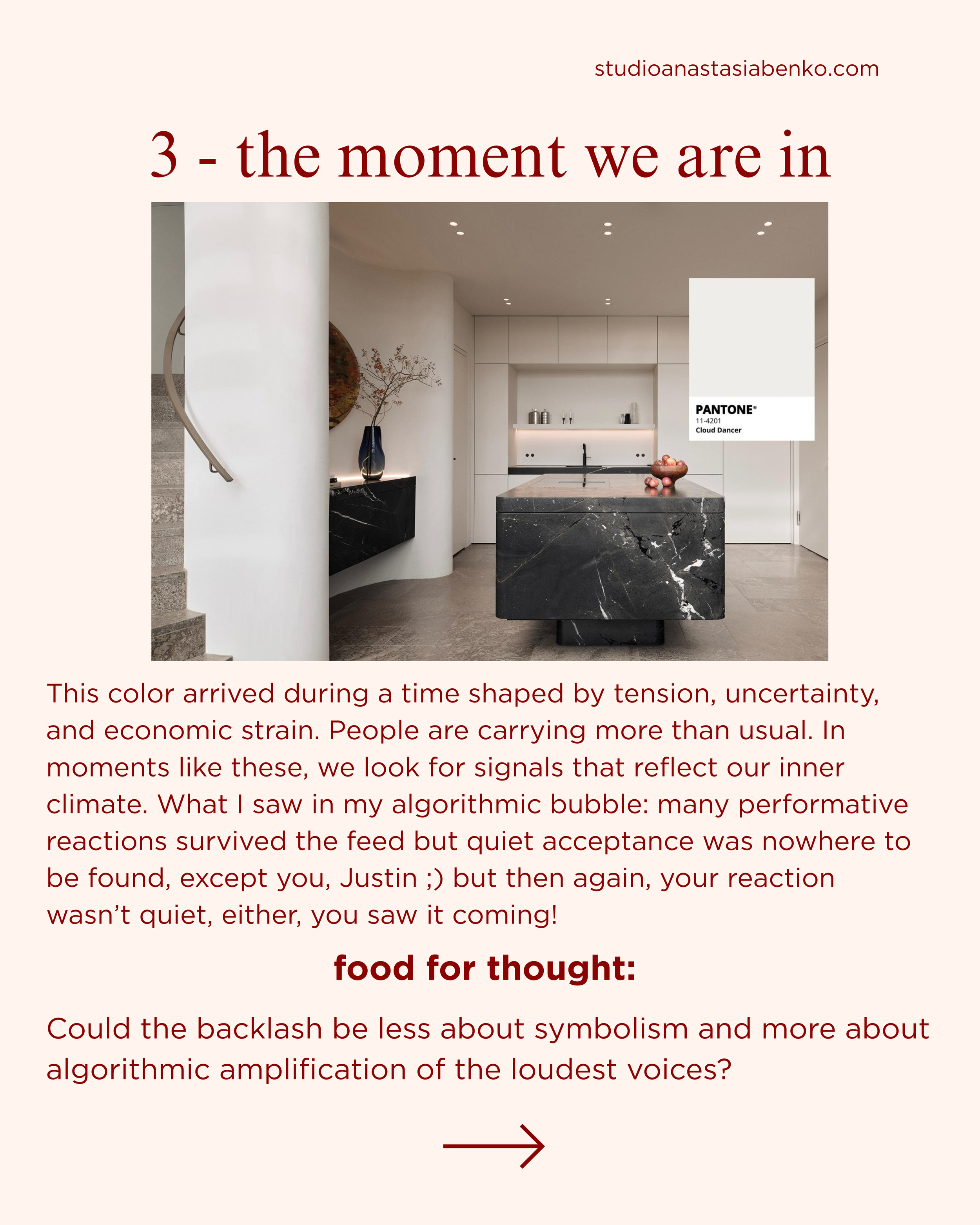
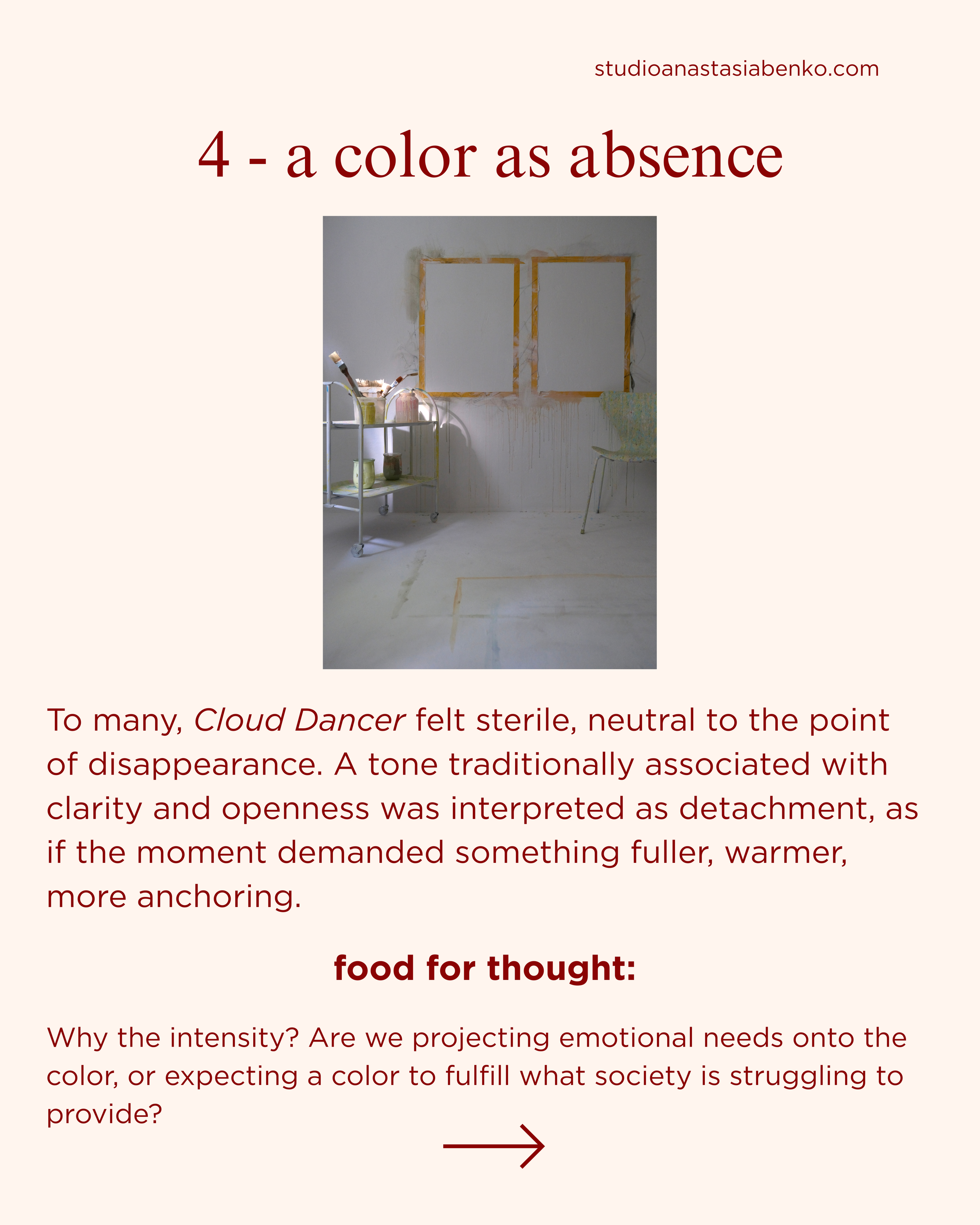
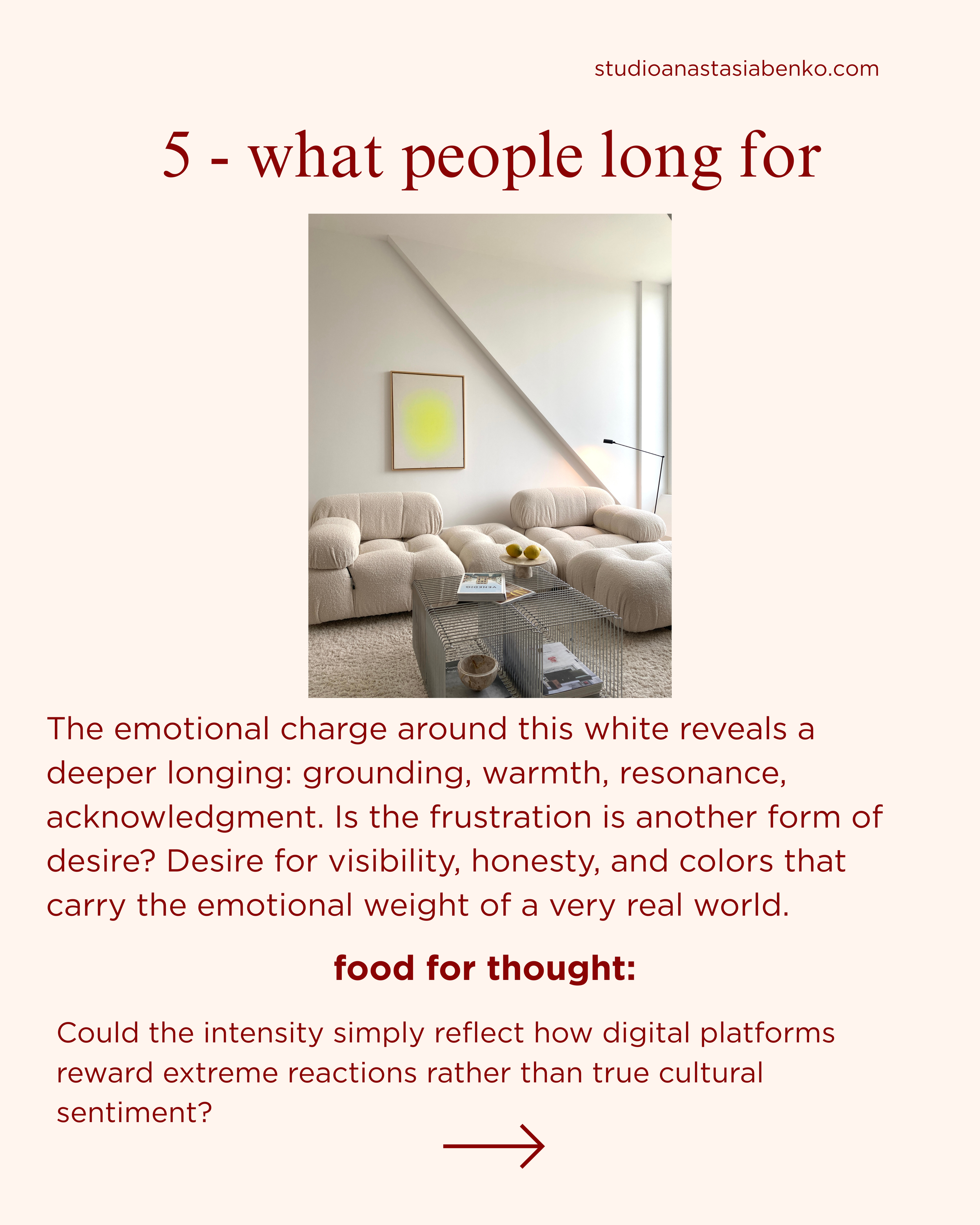
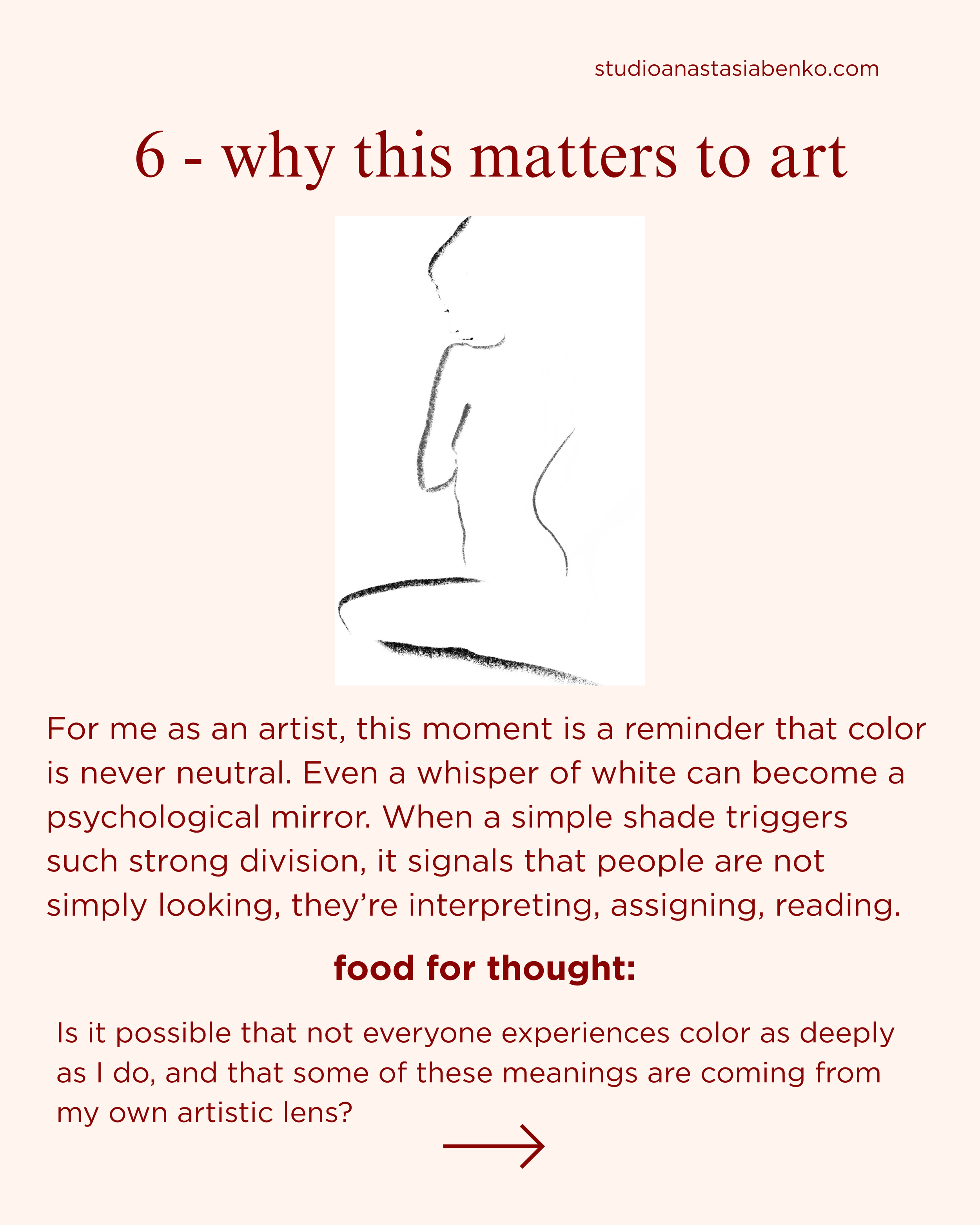
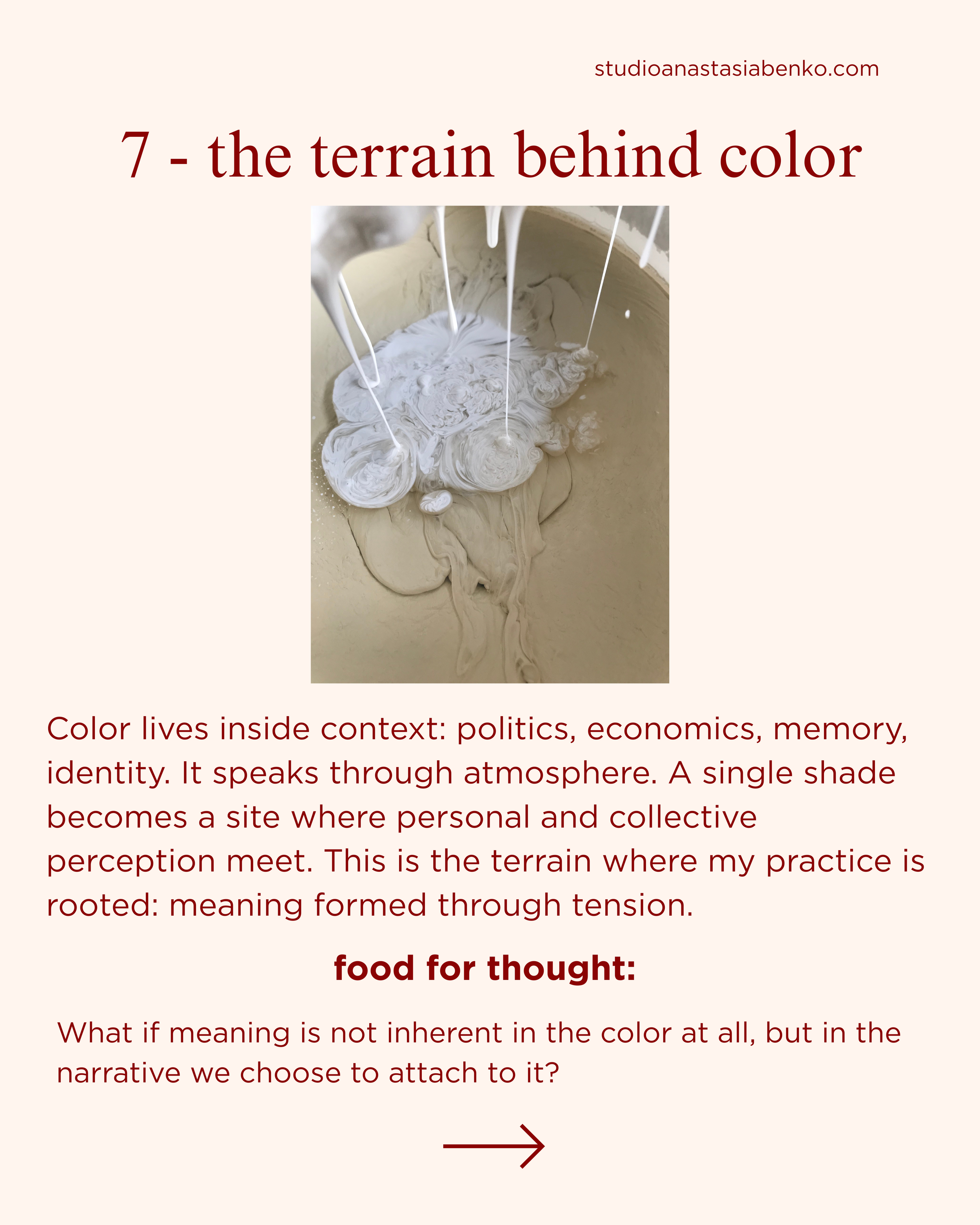
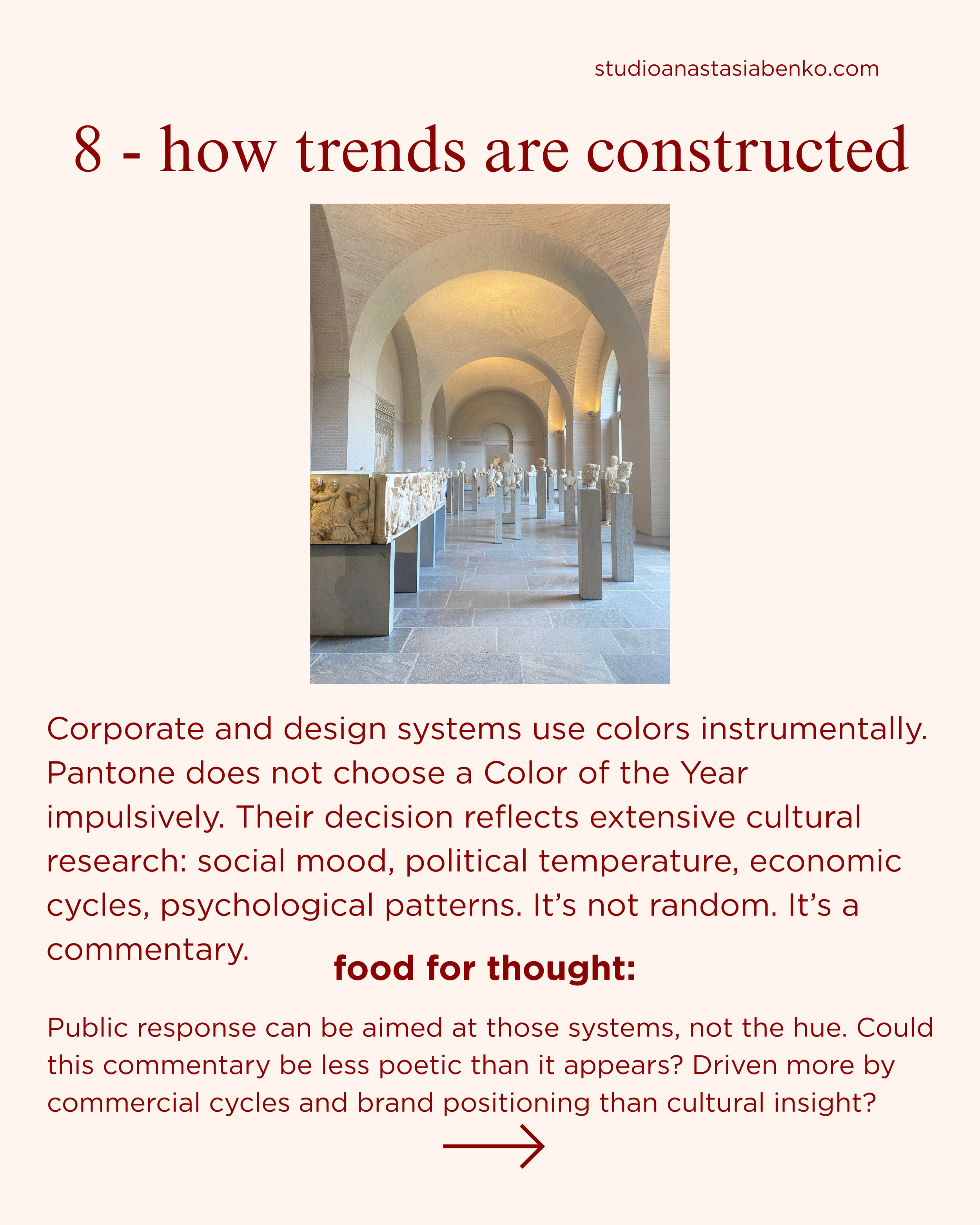
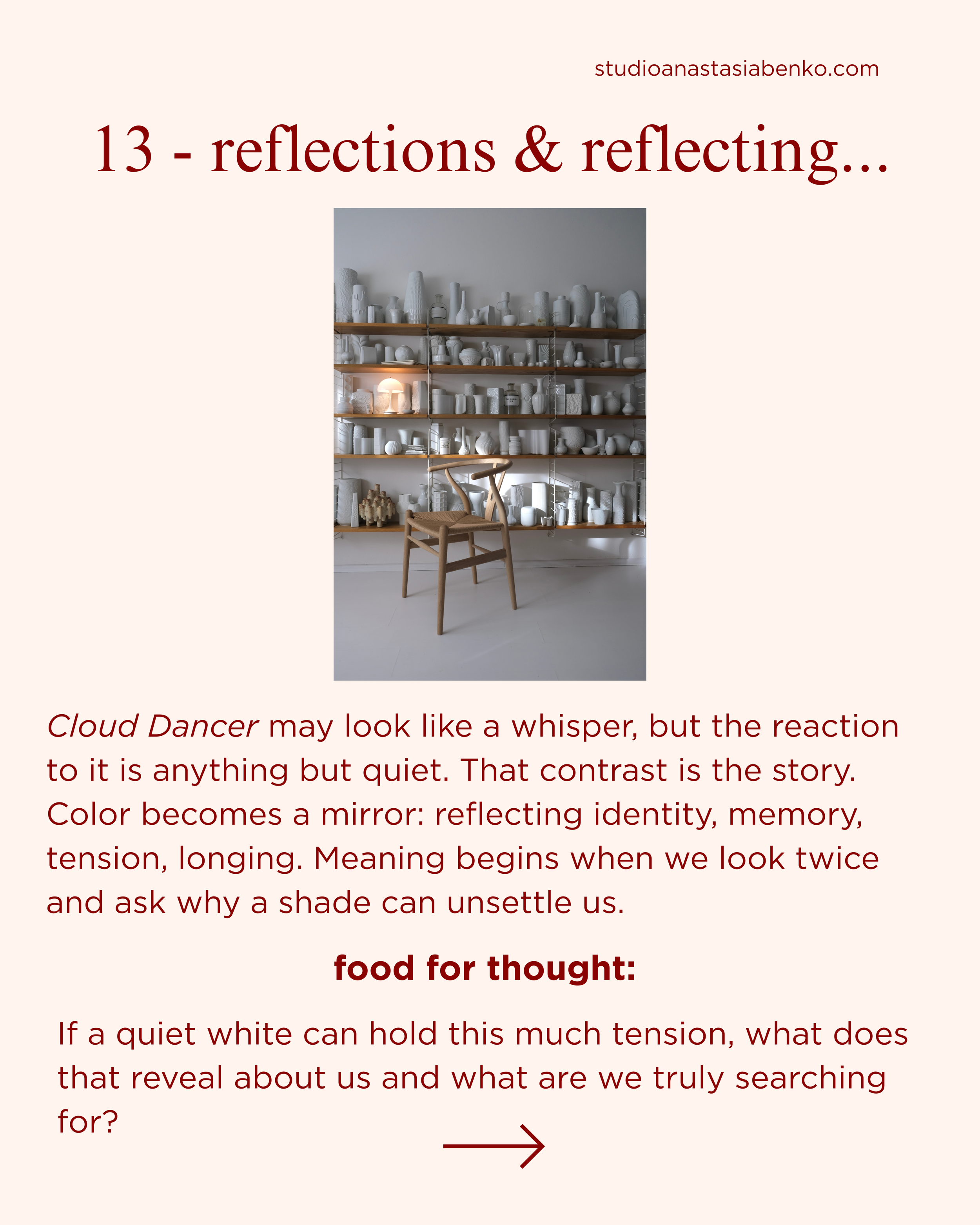
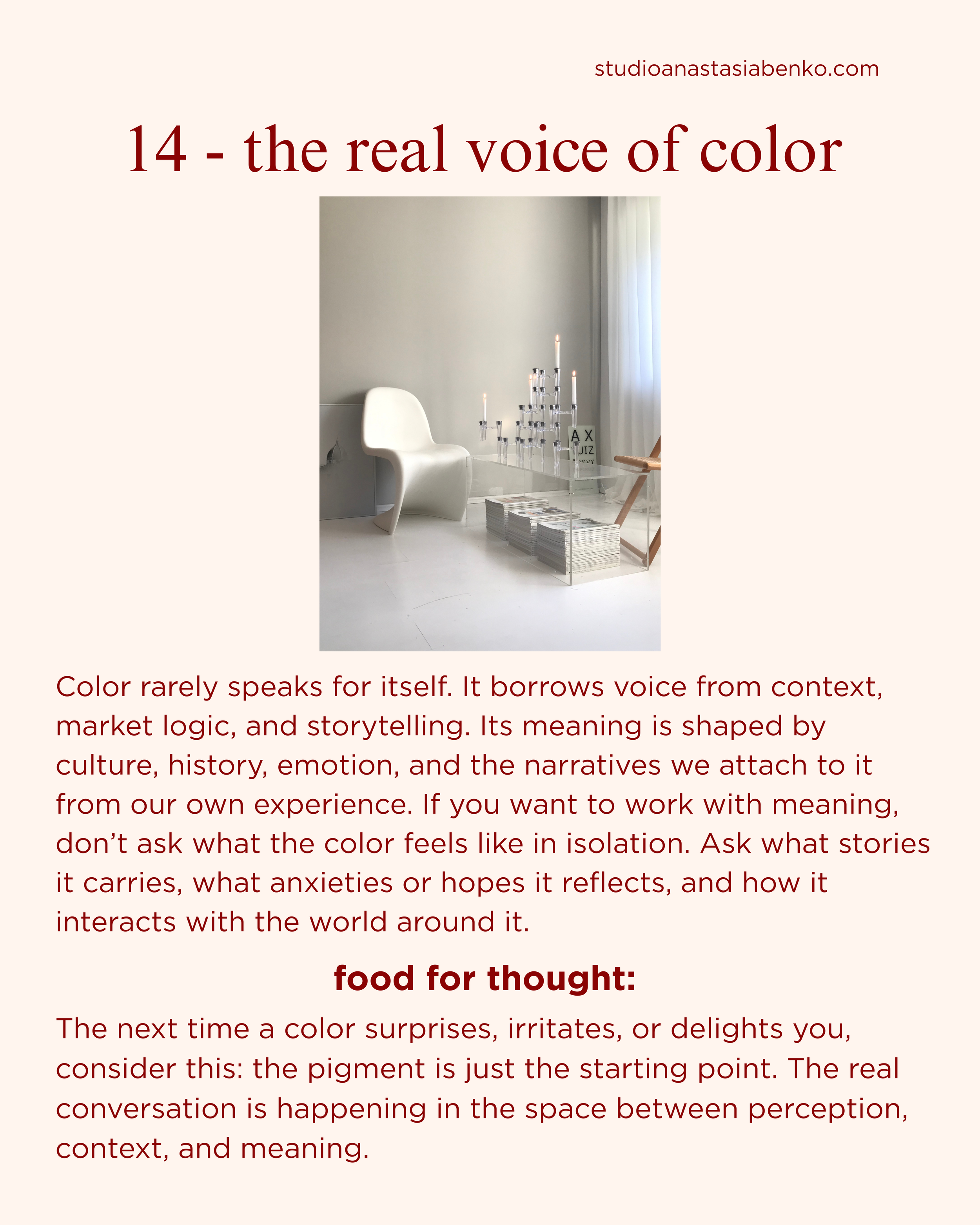
Pantone’s announcement of Cloud Dancer as the Color of the Year triggered an unusually strong response. I have never seen a Color of the Year provoke this level of irritation, confusion, or rejection! Many people expected an expressive tone for 2026. Instead they were handed a quiet, almost invisible white. The contrast between expectation and reality sparked so much food for thought. This white arrived in a moment shaped by global tension, uncertainty, polarization, and economic pressure. People do not only react to a color. They react to what they feel is missing in their lives. For some, white felt too sterile, too neutral, too empty. A color that traditionally symbolizes clarity and calm was suddenly read as avoidance or detachment. The backlash was not about the hue. It was about the times. If anything, the intensity of the response reveals a longing for grounding, warmth, direction, and emotional resonance. It shows how deeply people want to see their lived reality acknowledged. The complaints and debates are expressions of desire: desire for visibility, for emotional honesty, for color that holds the weight of the world we’re in. As an artist, this moment is a reminder that color is never neutral. Even a soft, almost weightless white can become a mirror of collective psychology. When a single shade provokes such divided feelings, it tells us that people are paying attention. Not only to aesthetics but to the cultural and emotional climate behind them. This is exactly the terrain where my work lives: the tension between perception, context, and meaning. Pantone does not choose a color in isolation. These decisions are shaped by broad cultural forecasting: economics, social sentiment, political atmospheres, and psychological patterns. A Color of the Year is less a prediction and more a commentary. It’s a snapshot of what a trend agency believes the world needs or is yearning for. Understanding this helps us see that trends are constructed narratives, not accidents. When a color triggers strong reactions, it becomes an opportunity to read the cultural moment more precisely. The backlash to Cloud Dancer exposes what people feel, what they fear, and what they hope for. It’s a chance to look deeper, beyond the surface of a trend announcement, into the emotional and social currents shaping it. These insights are valuable not only for art, but for how we understand the world around us.Cloud Dancer may look like a whisper, but the world’s reaction to it is loud. And that contrast is the real story. It shows that color is never just color. It is context, history, identity, longing, and tension. The conversation around this white invites us to observe more carefully, to question more deeply, and to interpret more sensitively. That is where meaning begins. - A. Xx PS: photocredit for slide '3 - the moment we are in' interiors: Justin Howlett, photo: Jonathan Sage